
The portable juicer blender combines cordless convenience with a compact format for households and hotels. This USB rechargeable juicer suits buyers seeking a portable fruit juicer or mini blender cup. The guide separates verified specifications from details that still require supplier confirmation.
Its appeal is straightforward: compact capacity, high-speed operation, rechargeable power, and modern styling. However, procurement also depends on cleaning, plug format, branding, packaging, and order quantity. Moreover, the product record leaves service and logistics details open, so buyers need a structured evaluation. Therefore, treat the following criteria as a sourcing framework, not as a substitute for written supplier answers.
Specifications buyers can verify
Start with the verified model record rather than assumptions drawn from the category. The table centralizes the capacity, motor, blade, material, power, and configuration details. Moreover, it separates stated options from claims that still need evidence. Therefore, use these entries as the baseline for supplier questions.
| Specification | Product fact |
|---|---|
| Model number | FX-25G32A |
| Product category | Portable Blender Cups |
| Product type | Portable juicer blender |
| Application | Household and hotel |
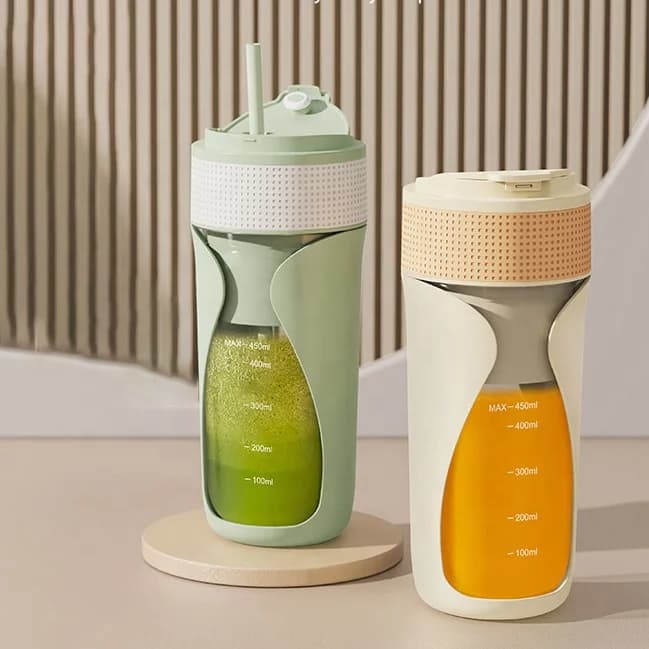
| Capacity | 450 mL |
| Motor power | 80 W |
| Rated speed | 20,000 RPM |
| Juicer type | Twin-gear triturating juicer |
| Blades | Six stainless steel blades |
| Material | Food-grade PP and stainless steel |
| Housing | Plastic |
| Battery | 1500 mAh |
| Charging mode | USB charging |
| Voltage | ≤36 V |
| Power source | Battery and electric |
| Functions | Non-drip spout and USB rechargeability |
| Feature | Multifunctional |
| App controlled | No |
| Heat preservation | No |
| Fruit examples | Orange, lemon, lime, and pomegranate |
| Style | Modern |
| Configurations | Orange, green, orange with plug, and green with plug |
| Logo | Customized logo available |
| Packaging | Color box |
| Minimum order quantity | 10 units |
| Place of origin | China |
The listed applications are household and hotel, where compact storage can be valuable. The listed power source combines battery and electric. However, ask the supplier to explain cleaning access around the spout and blade area.
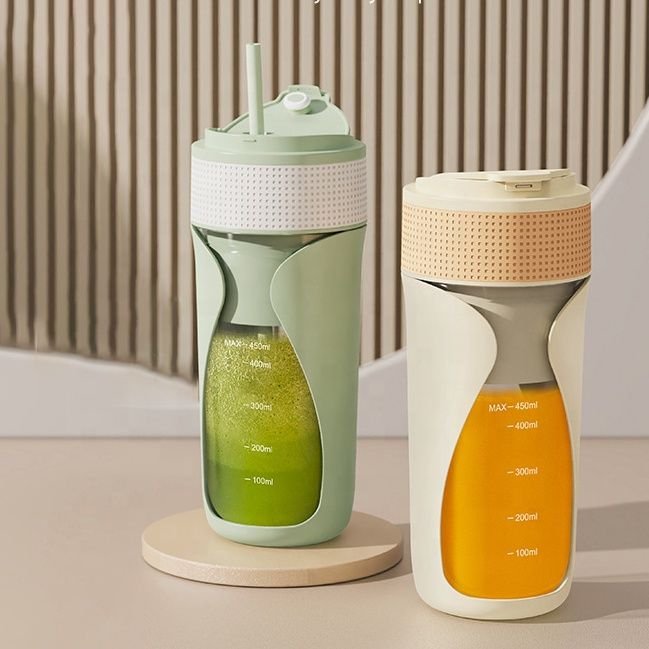
Motor, blades, and everyday use
For a portable juicer blender, the motor, gears, and blades work as one system. For instance, the verified fruit examples span citrus and pomegranate, matching the stated juicing role. The listed trituration format targets fruit processing, while the multifunction label broadens the intended kitchen role. However, the product record provides no output-consistency or juice-yield figures.
- Compact placement: The cup format suits space-conscious household and hotel setups.
- Flexible serving: The defined pouring function supports neater drink dispensing.
- Portable operation: Battery power allows use away from a fixed outlet.
- Branded presentation: Color choices and logo customization support coordinated programs.
Moreover, compare drink texture and cleanup time using the same fruit samples. Consequently, ask for a demonstration before comparing this model with another portable juicer blender. The listing title mentions crushed ice. However, the verified details do not define an ice test. Therefore, confirm acceptable cube dimensions, loading limits, and operating duty cycle. Instead, treat crushed-ice suitability as a supplier-confirmed capability until testing establishes it.
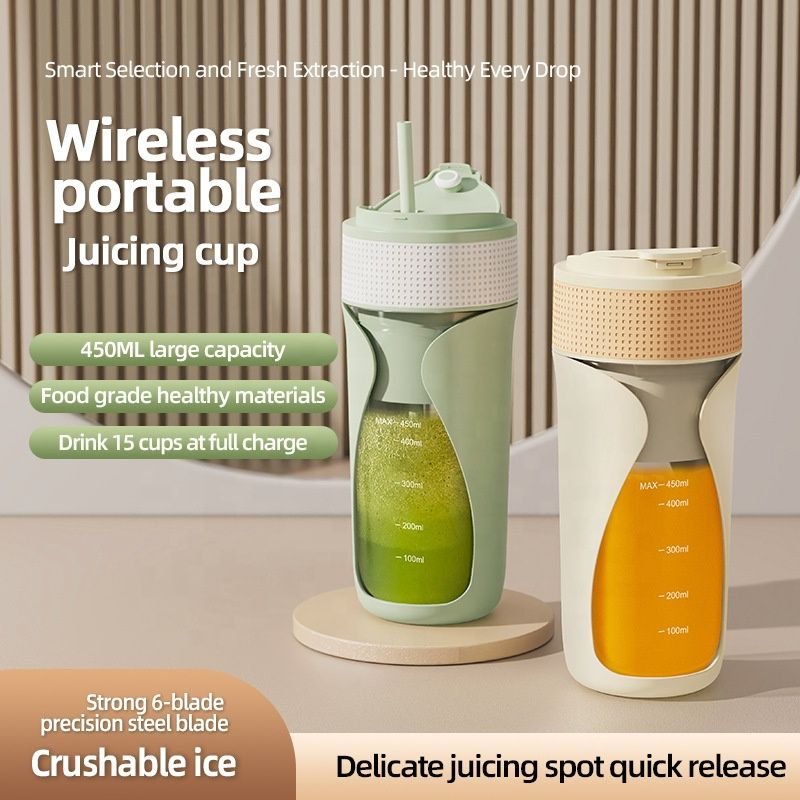
Capacity, charging, and service logistics
Any portable juicer blender should fit the actual charging and serving routine. Capacity affects batch size, serving workflow, and the space required for storage. For households, compare the stated volume with the drinks you prepare most often. For hotels, decide whether each room or refreshment point needs independent servings. Therefore, measure counter space, cabinet clearance, and the path from storage to service. Verify dimensions, weight, and usable fill volume against that workflow.
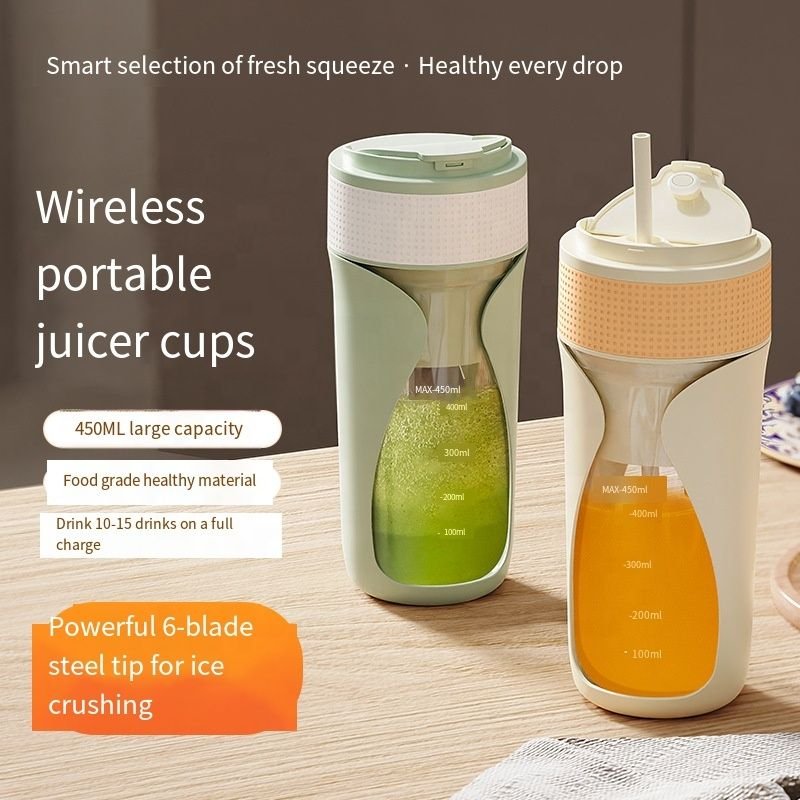
Battery logistics matter most when the unit serves guests, staff, or multiple daily routines. USB recharging supports cordless use after charging, but the facts do not state runtime or recharge time. Moreover, compare cycle duration under fruit and ice workloads. Ask about battery replacement availability and the supplier's support process. For fleet planning, request a conservative cycle estimate for one typical shift. Meanwhile, the offer includes with-plug and no-plug configurations. Confirm what the with-plug option includes, along with regional plug compatibility. Also confirm whether the package includes a USB cable or adapter. For hospitality use, calculate charging turns across the number of deployed units. Consequently, set an operational test around the busiest service period.
Cleaning, branding, and supplier confirmation
Cleaning is a procurement criterion because it affects downtime, staff training, and hygiene routines. The verified material mix includes several component types, so buyers need one complete care method. Washability, dishwasher suitability, blade removal, and sealing access determine how staff can service the cup. Therefore, obtain documented cleaning and disassembly instructions before approval.
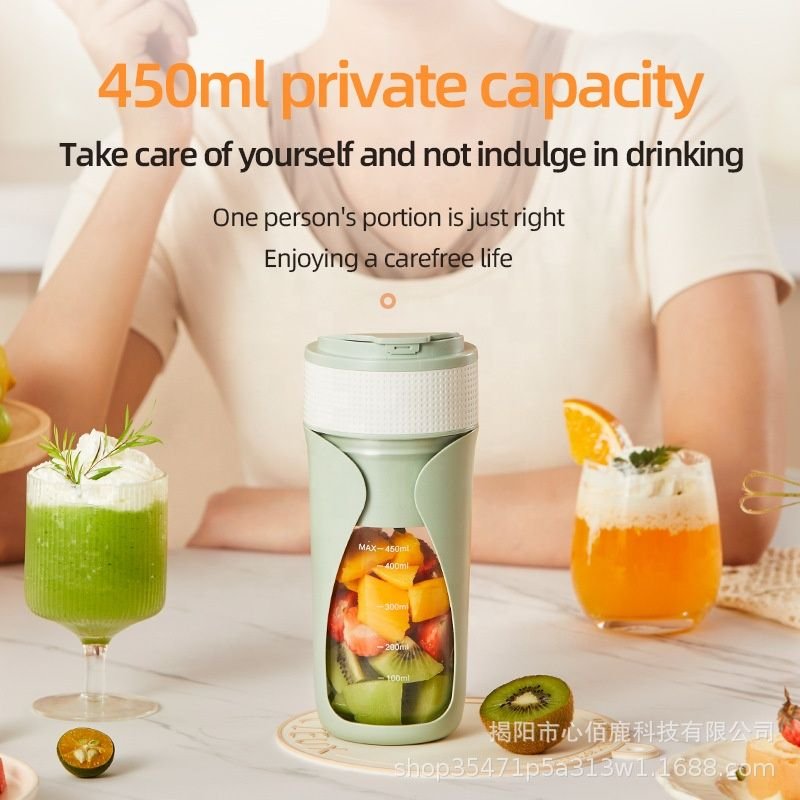
Customized logo availability makes this model relevant for branded hospitality or retail programs. The product record specifies a color box, while carton details remain open. Supplier support should be evaluated before the order reaches production. The stated MOQ is 10 units, but its application to colors and configurations needs confirmation. Additionally, sample availability, inspection criteria, and replacement handling can affect procurement risk.
Because the supplied facts do not state every operational or service detail, treat them as open rather than assumed.
Supplier confirmation required: First, obtain dimensions, usable fill volume, runtime, recharge time, cycle duration, and cleaning method. Second, confirm included accessories, plug standard, logo details, carton specifications, and MOQ interpretation. Third, request food-contact documentation, warranty terms, spare parts, after-sales support, lead time, and inspection procedures before approval.
A portable juicer blender procurement checklist
Use the following sequence to move from catalogue facts to an informed purchase. Verify each criterion with the supplier and, where possible, during sample testing.
- First, match the stated capacity to household portions, hotel service, and available storage space.
- Next, assess the listed motor, gear, and blade system against approved fruit samples.
- Then, run an ice test only after the supplier defines cube size and operating limits.
- For battery logistics, validate runtime, recharge time, cycle duration, and charging availability.
- For cleaning, confirm disassembly, washability, and component replacement procedures in writing.
- For branding, review logo artwork, color-box packaging, color allocation, and the stated MOQ.
- Before approval, obtain supplier answers on documentation, warranty, lead time, after-sales support, and inspections.
- After documentation, pilot a sample with representative users before a larger order.
Overall, this portable juicer blender is best considered against operating needs rather than headline specifications alone. Procurement teams should compare samples under the same fruit, ice, charging, and cleaning conditions. Therefore, approve the model only after operational and supplier checks align.
Conclusion: The FX-25G32A offers a compact, USB rechargeable format for household and hotel programs. Moreover, its suitability depends on validated battery logistics, cleaning access, plug details, and supplier terms. Therefore, use the supplier confirmations above to turn the stated minimum order into a controlled pilot.
 01
 02
 03